Arduino Nano V3 vs Raspberry Pi Pico
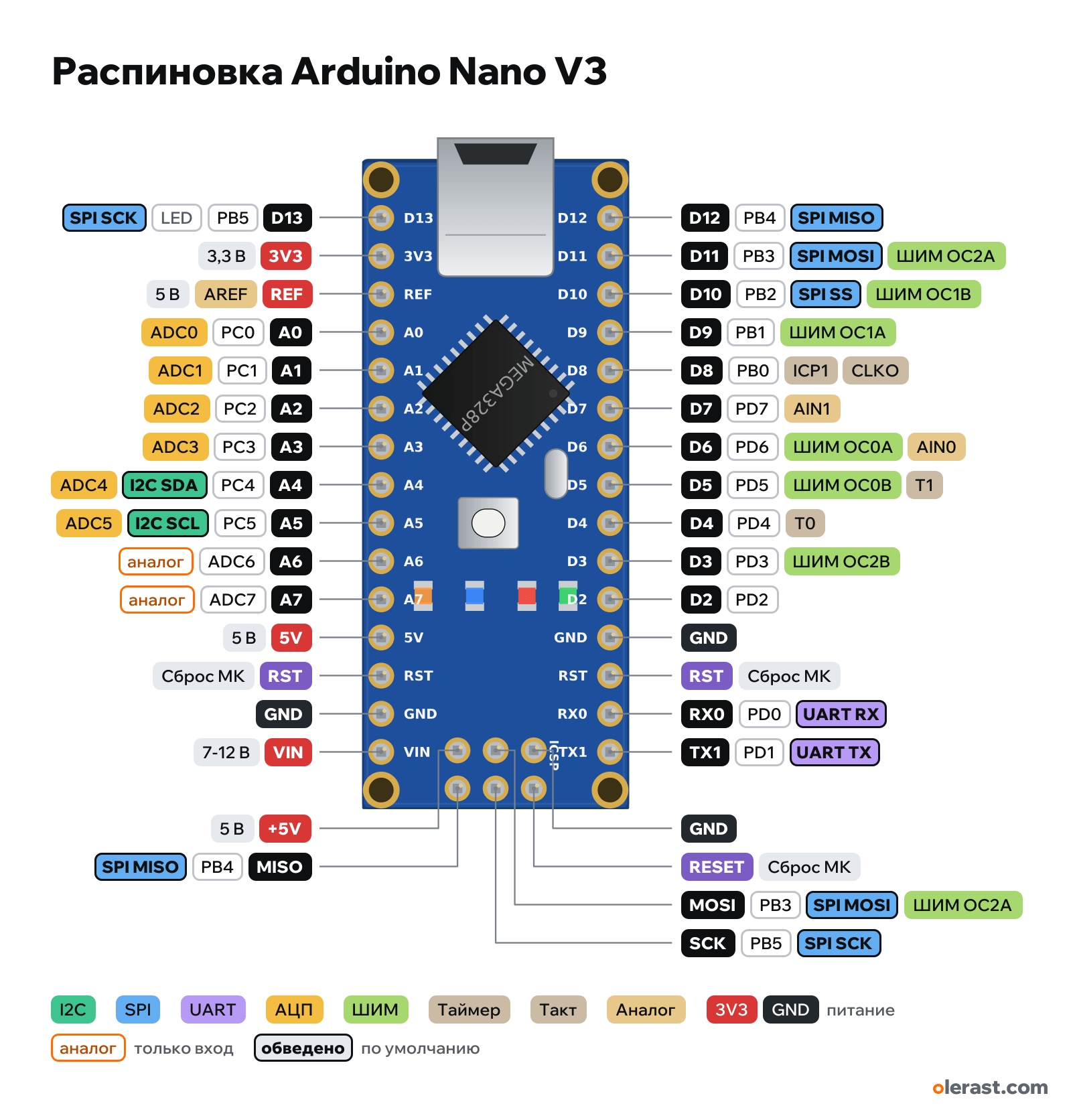
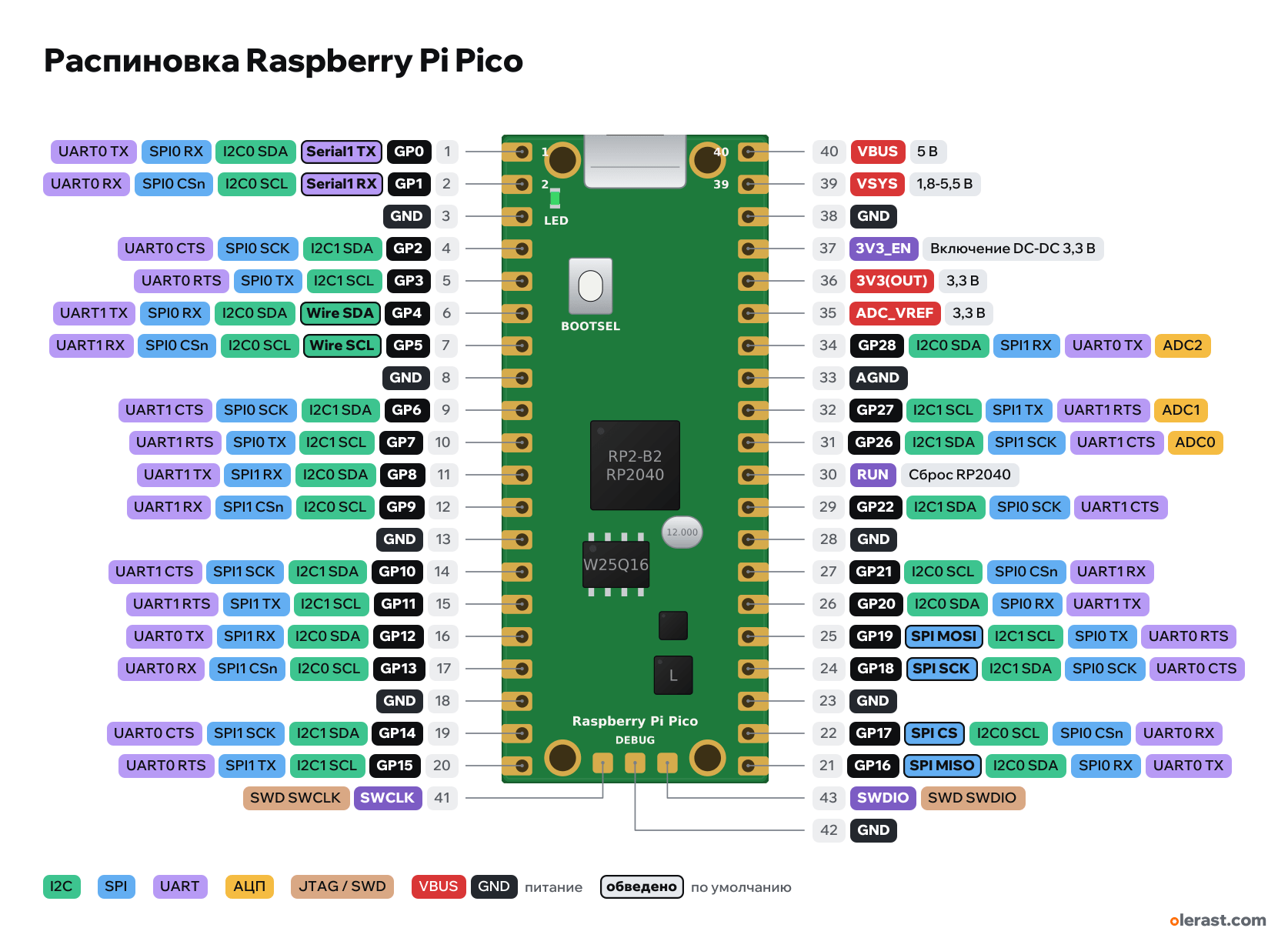
11 of 16 rows differ and are highlighted. Both pinouts are below the table.
| What | Arduino Nano V3 | Raspberry Pi Pico |
|---|---|---|
| Chip | ATmega328P | RP2040 |
| Cores | 1 × AVR, 8 bit | 2 × Cortex-M0+ |
| Clock | up to 16 MHz | up to 133 MHz |
| RAM | 2 KB | 264 KB |
| Flash | 32 KB | not stated |
| Wi-Fi | none | none |
| Bluetooth | none | none |
| GPIO | 23 free | 26 free |
| ADC | 8 inputs | 3 inputs |
| DAC | none | none |
| Touch | none | none |
| USB | mini-USB | micro-USB |
| Power | Mini-USB, VIN, 5V | Micro-USB, VSYS, VBUS |
| Battery | none | none |
| Size | 43.18 × 17.78 mm | 21 × 51 mm |
| Logic | 5 V | 3.3 V |
GPIO, ADC, DAC, touch, USB and power are counted from the board pinouts, without pins taken by flash and PSRAM. Cores, clock, RAM and radio: Microchip, ATmega328P Datasheet; Raspberry Pi, RP2040 Datasheet.
Compare Arduino Nano V3 with another board
Where the numbers in the table come from
GPIO, ADC, DAC, Touch, USB connector, power inputs and size are counted from the pinouts of the boards in the catalog. Free GPIOs are those without flash, PSRAM and lines used inside the board: on an ESP32 DevKit the flash pins GPIO6-11 are not counted.
Cores, clock speed, RAM, Wi-Fi and Bluetooth come from the datasheets of the chips and radio modules, and the source is named under the table. If a board runs below the chip's maximum frequency, like the 3.3 V Arduino Pro Mini at 8 MHz, the table shows the board's frequency.
Examples
- ESP32 DevKitC V4 and ESP32-C3 SuperMini: the first has 2 Xtensa LX6 cores, 26 free GPIOs, 2 DAC outputs and 10 Touch pins; the second has 1 RISC-V core up to 160 MHz, 13 GPIOs and USB-C on an 18 × 22.52 mm board.
- Arduino Uno R3 and Nano V3: one chip, an ATmega328P at 16 MHz. They differ in the USB connector (USB-B and mini-USB), the size and the number of pins.
FAQ
- How is the ESP32 different from the ESP32-C3?
- The ESP32 has two Xtensa LX6 cores up to 240 MHz, Bluetooth 4.2 with Classic mode, a DAC and Touch. The ESP32-C3 has one RISC-V core up to 160 MHz and Bluetooth 5 LE without Classic mode, and no DAC or Touch. The USB Serial/JTAG port is built into the C3 itself.