Which board to pick
Six questions about your project. Matching boards from the catalog show up right away, each with the reason it fits. No prices: they change every week.
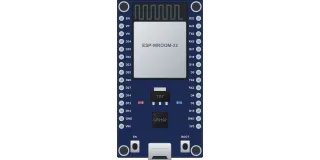
ESP32 DOIT DevKit V1, 30 pins
- Wi-Fi 4, 2.4 GHz and Bluetooth 4.2 and BLE
- 25 free GPIO, ADC on 15 pins
- 2 × Xtensa LX6, up to 240 MHz, RAM 520 KB
- micro-USB, 3.3 V logic, 28.2 × 51.8 mm
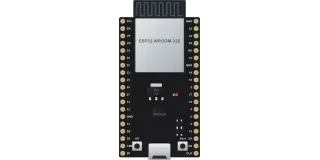
ESP32-DevKitC V4 (ESP32-WROOM-32E), 38 pins
- Wi-Fi 4, 2.4 GHz and Bluetooth 4.2 and BLE
- 26 free GPIO, ADC on 16 pins
- 2 × Xtensa LX6, up to 240 MHz, RAM 520 KB
- micro-USB, 3.3 V logic, 27.94 × 48.26 mm
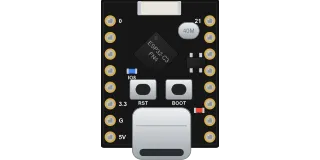
ESP32-C3 SuperMini
- Wi-Fi 4, 2.4 GHz and Bluetooth 5 LE
- 13 free GPIO, ADC on 6 pins
- 1 × RISC-V, up to 160 MHz, RAM 400 KB
- USB-C, 3.3 V logic, 18 × 22.52 mm
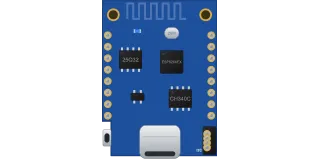
Wemos / LOLIN D1 mini (v4, USB-C)
- Wi-Fi 4, 2.4 GHz
- 13 free GPIO, ADC on 1 pin
- 1 × Tensilica L106, up to 160 MHz, RAM about 50 KB free with Wi-Fi
- USB-C, 3.3 V logic, 25.4 × 34.3 mm
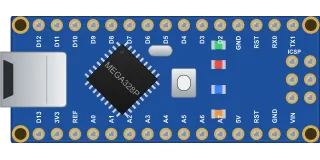
Arduino Nano (ATmega328P)
- 23 free GPIO, ADC on 8 pins
- 1 × AVR, 8 bit, up to 16 MHz, RAM 2 KB
- mini-USB, 5 V logic, 43.18 × 17.78 mm
How the boards are selected
The selection goes through the pinout catalog: of the dev boards with a microcontroller, those that match all your answers remain. Wi-Fi and Bluetooth come from the datasheet of the board's chip or radio module, battery input from the power inputs in the pinout, and the pin count from the free GPIOs without flash and PSRAM.
The Raspberry Pi 3, 4, 5 and Zero are not part of the selection: they are Linux computers, and their pinouts are in the catalog. Among the matching boards, popular ones come first, since they are easier to start with.
Examples
- Wi-Fi and Li-ion input: ESP32-S3 SuperMini, WEMOS LOLIN32 Lite, Seeed XIAO ESP32C3 and ESP32S3, LilyGO T-Display.
- Camera on the board: the catalog has one, the ESP32-CAM with an OV2640 and a microSD slot.